
The Argument Usually Starts With a Noise
It's almost always the same moment: you're backing out for work, the door grinds, shudders, or hangs up halfway, and one of you says "we just replaced that" while the other says "that was eight years ago." You're both probably right, and also both missing the point, because a garage door isn't one thing with one lifespan. It's several parts aging at completely different speeds, and the noise you're hearing is just whichever part is losing the race first.
It's Not One Lifespan, It's Three
Think of your garage door as three separate systems that happen to share one opening.
- The springs are rated in cycles, not years. A standard torsion spring is typically good for 10,000 to 15,000 cycles, which works out to roughly 7 to 9 years for a household that opens the door a couple of times a day. Use it more (a home business, teenagers, a dog door routine) and you'll burn through that faster.
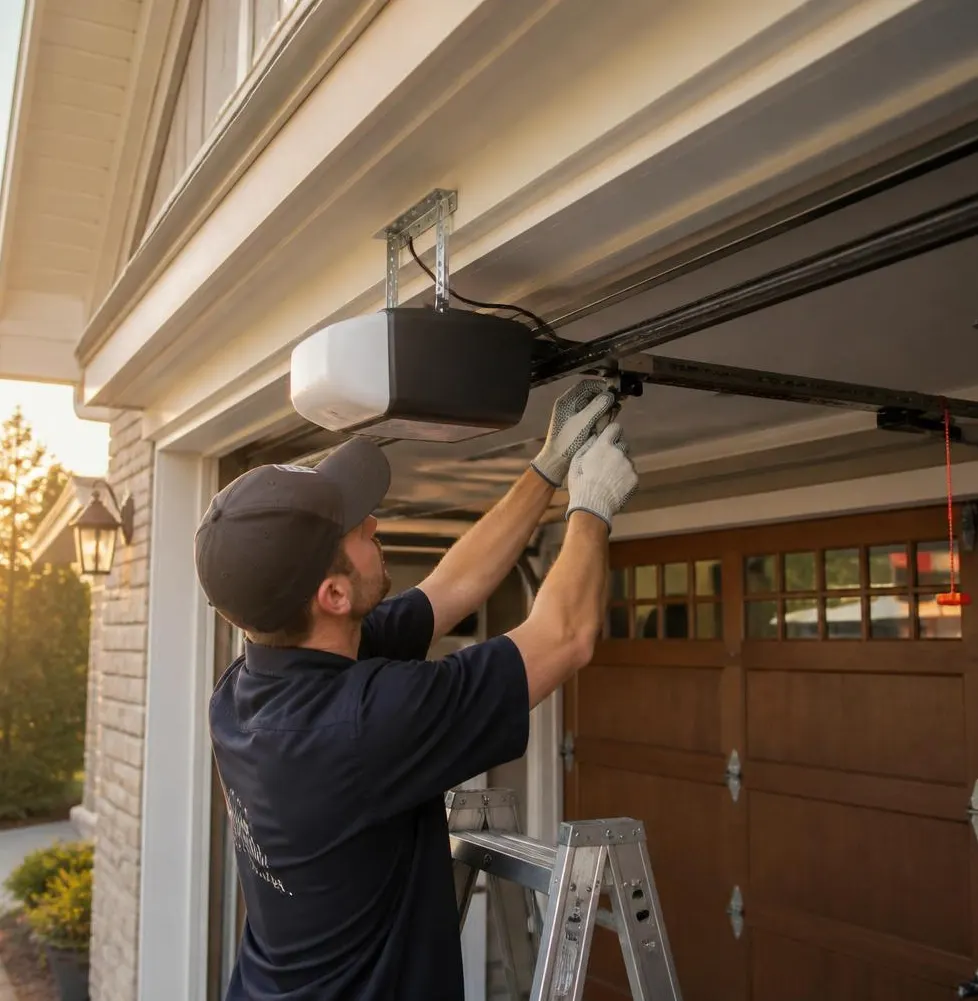
- The opener (the motor unit on the ceiling) usually lasts 10 to 15 years. It fails differently than a spring — instead of a sudden snap, you get slow symptoms: the remote works sometimes, the door reverses for no reason, or the motor runs but the door doesn't move.
- The door itself — the panels, track, and hardware — can last 15 to 30 years depending on material and how well it's been kept up. Steel doors with good weatherstripping tend to outlast wood, which can warp with our humidity swings, or cheaper aluminum, which dents and doesn't recover.
So when you're arguing about whether "the garage door" is old, you're often actually disagreeing about which part is old. The opener from 2014 and the springs from last year are both technically "the garage door."
What Shortens All of This, Specifically Here
Northeast Ohio isn't gentle on garage doors, and it's worth naming exactly why:
- Winter ice and road salt track into the garage on tires and boots, and that salty slush sits at the bottom of the track and on the lowest door panel. Over a winter or two, that corrodes hardware and eats at steel that isn't well sealed.
- Big temperature swings make metal contract and expand, which gradually loosens bolts, hinges, and track alignment. A door that was perfectly balanced in July can start binding by January.
- Humid summers are rough on wood doors and can make weatherstripping swell or crack faster than it would in a drier climate.
- Spring storms bring sudden pressure changes and wind-driven debris that stress the door and track, especially on older doors that are already out of balance.
- Skipped maintenance is the biggest multiplier of all of the above. An unlubricated roller or an out-of-balance door doesn't just wear out its own parts faster, it makes the opener work harder, which shortens the opener's life too.
What Actually Extends It
None of this requires anything exotic:
- Lubricate rollers, hinges, and the track a couple of times a year — once before winter and once before the humid stretch of summer is a reasonable rhythm.
- Wipe salt residue and slush off the bottom panel and track through the winter instead of letting it sit.
- Have the door's balance checked periodically. A door that slams down or feels heavy to lift by hand is out of balance, and that's hard on the springs, the opener, and the track all at once.
- Replace worn weatherstripping before it lets moisture in, not after.
- Don't ignore small noises. A squeak now is a cheap fix; a seized roller six months from now can throw off the whole track.
So, Repair or Replace?
A good rule of thumb: if the door and track are structurally sound and it's the opener or springs acting up, repair makes sense — those are individually replaceable parts on a system that otherwise still has years left. If the panels are rusted through, the track is bent, or you're facing your third repair call in two years on a door that's already 20-plus years old, you're usually throwing good money after bad, and a new installation ends up cheaper over time.
When to Call University Heights Garage Door
If you're hearing grinding, seeing uneven movement, or just realized nobody can remember the last time the springs were touched, that's worth a look before it becomes an emergency call on a Saturday. We handle Spring Replacement and Garage Door Maintenance for homes throughout University Heights, Cleveland Heights, South Euclid, and the surrounding suburbs, and we'll tell you plainly whether you're looking at a repair or whether it's time to talk replacement — no upselling, just what the door actually needs.
If your garage door in University Heights, OH is acting up, give University Heights Garage Door a call and we'll get it sorted before the next cold snap makes it worse.